
Home Solar Battery Guide 5kWh to 32kWh — Complete Buyer’s Guide
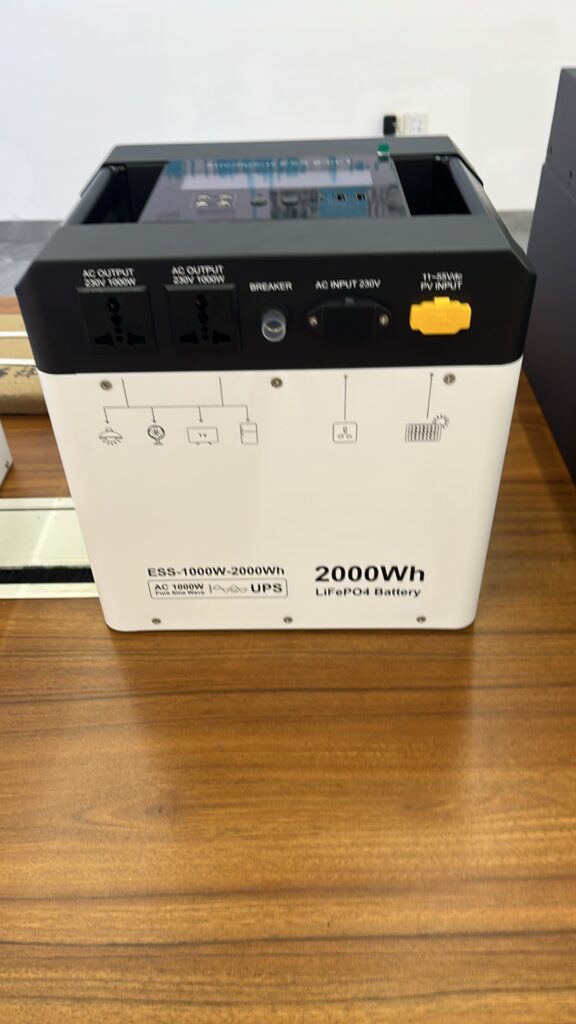
Complete Guide to Home Solar Battery Systems: 5kWh to 32kW
Here’s a situation you’ve probably seen.
A family in Lagos has solar panels on their roof. During the day, their 5kW array generates more power than they use. But at 7pm, when the sun sets and the grid goes down (again), they sit in the dark with fully charged phones and a refrigerator full of warming food. They have generation without storage — like having a water tap without a bucket.
This story repeats itself millions of times every evening across Africa, the Middle East, Latin America, and Southeast Asia. Solar panels have become cheap and accessible. But without a battery, solar is only half a solution. The battery is what makes solar useful at night. It’s what keeps the refrigerator running when the grid fails. It’s what turns an intermittent power source into a reliable one.
Quick Answer — What Size Home Solar Battery Do You Need? For basic lighting, phone charging, and a small refrigerator: 1-2kWh portable unit. For a small home with essential loads (lights, fridge, TV, fans): 5kWh all-in-one system. For a medium home running an air conditioner: 10-16kWh system. For a large home or small business needing full-day backup: 32kWh expandable system. The right size depends on your daily energy consumption, not your budget — undersizing a battery is the most common and most expensive mistake first-time buyers make.
If you’re a distributor, installer, or business owner looking to source energy storage systems for your market, this guide will walk you through every decision — from battery chemistry to inverter sizing to how to actually get these heavy systems shipped to your country without breaking the bank.
What Type of Battery Chemistry Should You Choose for Home Storage?
Quick Answer: Choose LiFePO4 (Lithium Iron Phosphate). It offers 6,000-8,000 charge cycles, inherent thermal stability (no fire risk), wide operating temperature range (-20°C to 55°C), and a 15-year design life. For home energy storage in 2026, there is no serious competing chemistry at comparable price points.
Dive Deeper
If you’ve bought a lead-acid battery for a solar system before, the experience probably wasn’t great. Lead-acid batteries are heavy, they need ventilation (they release hydrogen gas), you can only use about 50% of their rated capacity without damaging them, and they last 3-5 years before needing replacement. They’re cheap upfront and expensive over time.
The battery chemistry comparison that matters:
| Specification | Lead-Acid | Li-NMC (Lithium Nickel Manganese Cobalt) | LiFePO4 (Lithium Iron Phosphate) |
|---|---|---|---|
| Cycle Life (80% DOD) | 500-1,000 | 2,000-4,000 | 6,000-8,000 |
| Usable Capacity | 50% | 90% | 90-100% |
| Thermal Runaway Risk | Low (but H2 gas) | Moderate-High | Very Low (inherently safe) |
| Operating Temp | 0°C to 40°C | -10°C to 45°C | -20°C to 55°C |
| Weight (per kWh) | 25-30 kg | 6-8 kg | 8-12 kg |
| Cost per kWh (2026) | $80-120 | $120-180 | $100-160 |
| Design Life | 3-5 years | 8-12 years | 12-15 years |
| Maintenance | Needs watering, equalizing | None | None |
Why LiFePO4 dominates home storage in 2026: The combination of safety and cycle life is unbeatable for residential applications. A LiFePO4 battery installed indoors doesn’t vent gas, doesn’t catch fire if punctured, and will still have 80% of its original capacity after 6,000 full discharge cycles — which is over 16 years of daily cycling. For a customer in Accra or Nairobi who depends on this battery to run their business or keep their family comfortable, that reliability isn’t a spec sheet number — it’s peace of mind.
The one thing LiFePO4 doesn’t do well: extreme cold charging. Below 0°C, LiFePO4 cells shouldn’t be charged (they can still discharge). If your market includes cold mountain regions, make sure the battery system includes a built-in heating function. Most quality all-in-one systems now include this.
How Do You Calculate the Right Battery Size for Your Customers?
Quick Answer: List every appliance the customer will run on battery power. Multiply each appliance’s wattage by the hours per day it runs. Sum everything to get daily watt-hours (Wh). Divide by battery voltage (51.2V for most home systems) to get amp-hours (Ah). Then add 20-30% buffer. A typical small African home needs 3-5kWh per day. A home with air conditioning needs 10-16kWh. A small business or large compound needs 20-32kWh+.
Dive Deeper
Undersizing is the most common mistake in home energy storage. Here’s why it happens — and why it’s expensive.
Scenario A: The 5kWh undersize trap. A distributor sells a customer a 5kWh all-in-one system. The customer is happy on day one — it powers lights, TV, and the refrigerator. Then they plug in a small air conditioner during a heat wave. The battery drains in 2 hours instead of the expected 8. The customer blames the product. The distributor gets a bad reputation. The actual problem? Nobody did the math before ordering.
Scenario B: How to do the math correctly.
Let’s calculate for a typical home in a hot climate:
| Appliance | Power (Watts) | Hours/Day | Daily Energy (Wh) |
|---|---|---|---|
| LED Lights (×8) | 80 | 6 | 480 |
| Ceiling Fan (×3) | 210 | 10 | 2,100 |
| Refrigerator (200L) | 150 (avg) | 12 (compressor cycling) | 1,800 |
| Television 43″ LED | 100 | 5 | 500 |
| Laptop + Phone Charging | 100 | 4 | 400 |
| Router / Internet | 20 | 24 | 480 |
| Small AC (12,000 BTU) | 1,200 | 6 | 7,200 |
| TOTAL | 12,960 Wh |
This home needs approximately 13kWh of usable battery capacity per day. A 5kWh system would be dead by mid-evening. A 10kWh system would barely cover it without AC. A 16kWh system provides comfortable margin. The AC alone consumes more than all other appliances combined — this is where most sizing mistakes happen.
The solar panel side of the equation: To charge a 16kWh battery, you need roughly 3,500-4,000W of solar panels (assuming 4-5 peak sun hours). If your customer’s roof only fits 2,000W of panels, they can’t fully charge a 16kWh battery in one day. The battery and solar array must be sized together.
All-in-One vs. Separate Components: Which System Architecture Is Right?
Quick Answer: For most homes, choose an all-in-one system (battery + inverter integrated in one unit). It’s simpler to install, takes up less space, and has fewer compatibility issues. For large homes (20kWh+) or commercial applications, choose a split system — separate batteries and inverter — for flexibility and easier maintenance.
Dive Deeper
All-in-One Systems (Integrated): The battery, inverter, solar charge controller, and monitoring system are housed in a single enclosure. You connect solar panels on one side and your home load on the other. Everything communicates internally. Examples: the Kucher ESS-6200W series (5kWh, 10kWh, 16kWh).
Advantages: One unit to install, guaranteed component compatibility, simpler warranty (one manufacturer), smaller footprint, easier for non-technical customers to understand.
Disadvantages: If the inverter fails, the whole unit needs service. Less flexibility to upgrade individual components. Typically max out around 16kWh in a single unit.
Split Systems (Separate Battery + Inverter): The battery pack and inverter are separate units connected by DC cables. You choose each component independently. Examples: the Kucher 32kWh battery module paired with a 6.2kW or 12kW external inverter from brands like Deye, Growatt, or Victron.
Advantages: Highly flexible — upgrade battery capacity without changing the inverter. Replace a failed inverter without touching the battery. Mix and match brands (with compatibility verification). Scale to 480kWh by adding battery modules.
Disadvantages: Requires more technical knowledge to specify and install correctly. More physical space. Two separate warranties to manage. Potential compatibility issues if not properly matched.
The decision framework: If your customer needs 16kWh or less and values simplicity → all-in-one. If your customer needs 20kWh+ or has plans to expand → split system. If you’re a distributor, stock all-in-one units for the mass market and offer split systems as a premium/commercial option.
What Should You Look for in an Inverter?
Quick Answer: Pure sine wave output (mandatory for appliances with motors), sufficient surge capacity (at least 2× rated power for motor startup), MPPT solar charge controller (not PWM), and compatibility with the battery’s communication protocol (CAN/RS485). A good inverter for a 5-16kWh home system should be rated at 5,000-6,200W continuous with 10,000W+ surge.
Dive Deeper
The inverter is the brains of the system. It converts DC power from the battery (and solar panels) into AC power that your appliances can use. A bad inverter choice will cause flickering lights, damaged electronics, and appliances that refuse to start.
Critical inverter specifications:
| Spec | What to Look For | Why |
|---|---|---|
| Waveform | Pure Sine Wave | Essential for fridges, ACs, pumps, and electronics |
| Continuous Power | Match to your total load + 20% buffer | Determines what you can run simultaneously |
| Surge Power | 2-3× continuous for 5+ seconds | Motor startup draws 3-7× running current |
| MPPT vs PWM | MPPT mandatory | MPPT is 20-30% more efficient than PWM |
| PV Input Voltage | 120V-500V range recommended | Allows longer solar string configurations |
| Transfer Time | <20ms for UPS mode | Faster than most appliances notice |
| Communication | CAN + RS485 | For BMS communication with battery |
| Certifications | IEC/EN62109, VDE4105 | Required for grid connection in most countries |
The built-in inverter advantage: All-in-one systems (like the Kucher ESS-6200W series) come with the inverter pre-integrated and pre-configured. The manufacturer has already verified compatibility. You don’t need to research inverter-battery communication protocols or calculate cable sizes. For first-time importers and distributors, this removes significant technical risk.
For the 32kWh split system: The external inverter gives you choice. You can pair it with a 6.2kW inverter for basic home backup or a 12kW inverter for heavy loads. Compatible inverter brands include Pylontech, Growatt, Deye, Victron, SMA, GoodWe, Luxpower, Schneider, and more — covering the major brands your customers may already trust.
How Do You Import Battery Systems — and Why DDP Matters?
Quick Answer: Battery systems ship via sea freight as dangerous goods (UN 3480, Class 9). Air freight is not recommended and often not available. DDP (Delivered Duty Paid) shipping is strongly recommended for first-time battery importers — it covers export clearance, ocean freight, import duties, and last-mile delivery in one all-inclusive price. Transit times: 25-45 days to Africa, 25-35 days to Europe, 15-25 days to Middle East.
Dive Deeper
Shipping batteries internationally is more complex than shipping most products. Lithium batteries are classified as dangerous goods. They require special packaging, labeling, and documentation. The shipping company needs to know exactly what they’re carrying — the battery chemistry, capacity, state of charge, and UN test certification.
Why DDP is the right choice for battery imports:
- The supplier’s logistics partner handles dangerous goods documentation
- Import customs for batteries can be complex — let experts handle it
- One all-inclusive price eliminates the risk of surprise duties or fees
- If something goes wrong in transit, you have one point of contact
What “DDP door-to-door” actually means: The factory packs your batteries in UN-certified packaging. A truck picks them up and takes them to the port. They go through Chinese export customs (dangerous goods declaration). They’re loaded onto a vessel. After 25-45 days at sea, they arrive at your destination port. The logistics partner clears import customs, pays duties and taxes, arranges last-mile trucking, and delivers to your warehouse. You pay one price and receive the goods at your door.
A typical DDP battery shipment timeline to Lagos, Nigeria:
- Week 1-2: Production finalization + UN38.3 documentation + export packing
- Week 3: Truck to port + Chinese export customs clearance
- Week 4-8: Ocean freight (Shanghai → Lagos, ~30-35 days)
- Week 9: Nigerian import customs clearance + duty payment
- Week 10: Last-mile delivery to your warehouse
Total: approximately 8-10 weeks from order finalization to delivery.
Is OEM Branding Available for Energy Storage Systems?
Quick Answer: Yes. OEM branding — your logo, your color scheme, your packaging — is available for orders of 30+ units for custom all-in-one systems. The factory can customize the enclosure color, laser-engrave your logo, print your brand on the packaging, and provide neutral (blank) units with no factory identification. Lead time for OEM orders: 2-3 months.
Dive Deeper
Building your own energy storage brand in your local market is one of the highest-ROI strategies available to distributors. Here’s why: when a customer in Kenya or Brazil buys a “Kucher” branded battery, they can Google the brand name, find the factory in China, and potentially go direct for their next purchase. When they buy a battery with YOUR brand name on it, they can’t go around you — you ARE the brand.
The OEM branding process:
- You provide your logo artwork (AI/EPS/PDF vector format) and brand color codes
- Factory creates a mockup showing logo placement, color scheme, and packaging design
- You approve the mockup or request revisions
- Factory produces 1-2 pre-production samples with your branding (2-3 weeks)
- You approve the physical sample
- Mass production begins (4-6 weeks for 30-100 units)
- Quality inspection before shipping
- Sea freight DDP to your warehouse
What you can customize:
- Enclosure color (within factory’s capabilities)
- Logo: laser engraving on metal/plastic surfaces, screen printing on enclosures
- Packaging: custom-printed boxes with your brand, or neutral packaging with your labels
- User manual: your brand name, your language, your contact information
- Mobile app: some manufacturers offer white-label app options for monitoring
Neutral packaging as a middle ground: If you’re not ready to commit to full OEM branding, start with neutral packaging. The factory ships units with no branding, no logos, and no manufacturer identification. You add your own labels or stickers in your warehouse. This lets you build brand recognition at lower MOQ and lower upfront investment.
Let Oridy Energy Handle Your Energy Storage Sourcing
Sourcing the right energy storage system for your market involves navigating battery chemistry choices, inverter compatibility, capacity sizing, OEM branding options, dangerous goods shipping regulations, and import customs procedures — all while ensuring price competitiveness and reliable after-sales support.
That’s exactly what Oridy Energy does.
We’re your China-based supply chain partner for energy storage, solar, and EV charging products. We don’t just connect you with a factory — we manage the entire process:
- Right-sizing your order: We help you choose the right products and capacities for your market — not what the factory wants to sell.
- Quality verification: Every order is inspected before shipping. You receive test reports and photos before you pay the balance.
- Flexible MOQ: Need 5 units to test your market? We combine orders across clients to make it work.
- DDP door-to-door: One price. Products at your warehouse. Dangerous goods documentation handled. Customs cleared.
- OEM branding: Your brand on quality products. No factory logos. No traceable supplier info. Your customers buy from you.
Tell us your target market, typical customer profile, and budget — we’ll recommend the right products and handle everything else.
📧 info@oridy.net | 📱 +86 18217811889
Frequently Asked Questions
Q: Can I run an air conditioner on a battery system?
A: Yes, but you need enough capacity and inverter power. A typical 12,000 BTU AC draws 1,200-1,500W continuously and surges to 3,500W+ on startup. A 5kWh battery would run it for about 3-4 hours. A 16kWh battery would run it for 10-12 hours. Make sure the inverter’s surge rating can handle the AC compressor startup.
Q: What happens when the battery runs out during a grid outage?
A: The system automatically switches to grid bypass (if grid is available) or shuts down (if off-grid). When solar power becomes available in the morning, the MPPT charge controller resumes charging the battery. Most systems can be configured to keep a reserve percentage (e.g., 20%) for emergency use.
Q: How many solar panels do I need for a 10kWh battery?
A: Roughly 2,000-2,500W of solar panels, assuming 4-5 peak sun hours. That’s approximately 4-6 standard 550W-630W panels. The exact number depends on your local solar irradiance, panel orientation, and shading. Always size panels to match or slightly exceed daily battery capacity.
Q: Can I ship a battery system by air freight to get it faster?
A: No. Lithium batteries over 100Wh are classified as dangerous goods (UN 3480, Class 9) and are restricted from passenger aircraft. Cargo aircraft may accept them under strict conditions, but the cost is prohibitive for heavy home storage batteries (78-247kg each). Sea freight is the only practical option for these products.
Q: What’s the warranty on these battery systems?
A: Standard manufacturer warranty covers 5-10 years depending on the product. LiFePO4 cells are typically warranted for 6,000-8,000 cycles or 10 years, whichever comes first. The inverter typically carries a 2-5 year warranty. For warranty claims, we coordinate with the factory on your behalf. We recommend keeping 1-2 spare units from your initial order to cover any rare DOA cases.
© 2026 Oridy Energy. Your Reliable New Energy Supply Chain Partner.