
Home Energy Storage Off-Grid Africa — Buy & Import Guide 2026
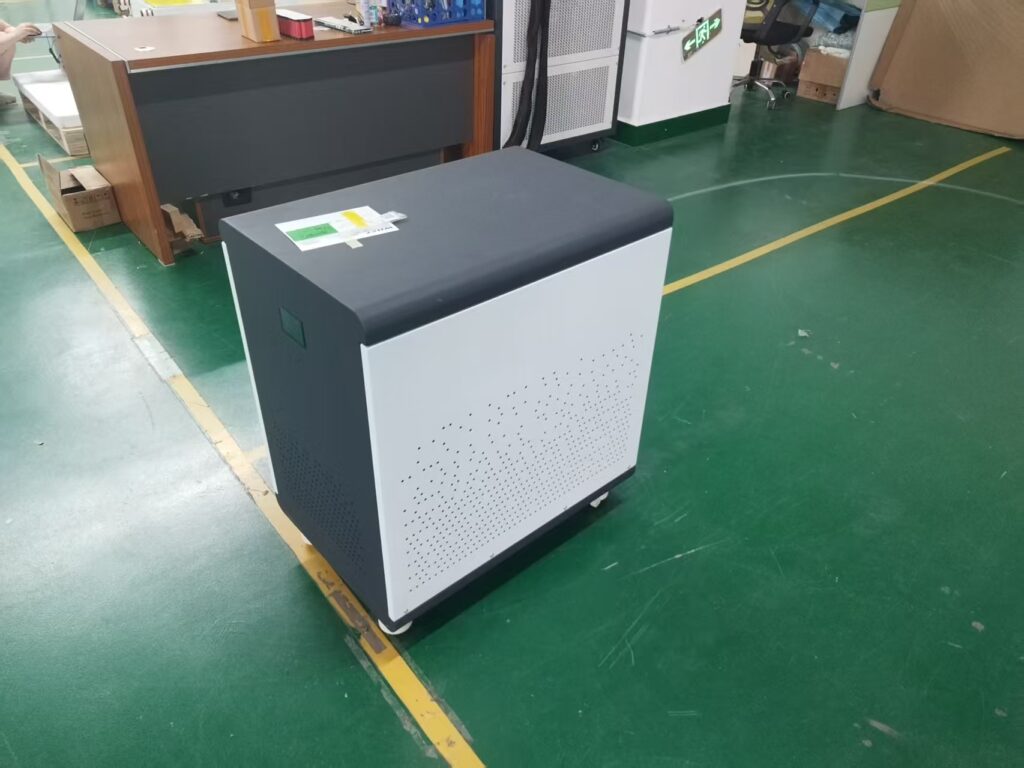
Home Energy Storage for Off-Grid Africa: What to Buy & How to Import
A situation unfolding across an entire continent.
Over 600 million people in sub-Saharan Africa lack reliable access to electricity. Not “cheap electricity” — electricity, period. In Nigeria, Africa’s largest economy, the national grid collapses several times a year. In rural Kenya, the nearest power line might be 50 kilometers away. In parts of Ghana, “dumsor” (persistent power outages) is a word every child knows. And yet — every one of these markets has abundant sunshine. The sun shines for 5-7 peak hours per day across most of the continent. The raw energy is there. What’s missing are the batteries to store it.
This isn’t a charity problem. It’s a market opportunity worth billions. Families that currently spend $10-30 per month on kerosene, candles, generator fuel, and phone-charging kiosks are ready to invest in a battery system that costs less over 3 years than what they’re already spending on alternatives. Businesses that lose inventory every time the grid fails are ready to pay for reliable backup. Telecom towers that run diesel generators 24/7 are switching to solar+battery and saving 60-70% on energy costs.
Quick Answer — What Energy Storage System Should You Buy for the African Market? For basic household electricity (lights, phone charging, fan, small TV): a 1-2kWh portable power station. For a small home with a refrigerator: a 5kWh all-in-one system. For a family home running multiple appliances: a 10-16kWh all-in-one. For a small business, telecom tower, or large compound: a 32kWh split system expandable to 480kWh. Always choose LiFePO4 chemistry. Always ship by sea DDP. Always pair with solar panels — a battery without solar generation is a very expensive fuel tank with nothing to fill it.
If you’re a distributor, installer, or entrepreneur looking to bring energy storage to African markets, this guide covers everything from product selection to shipping logistics to avoiding the most expensive mistakes.
Why Is LiFePO4 the Only Battery Chemistry That Makes Sense for Africa?
Quick Answer: LiFePO4 (Lithium Iron Phosphate) batteries are inherently safe — they don’t catch fire when punctured or overcharged. They last 6,000-8,000 full discharge cycles (15+ years of daily use). They operate in -20°C to 55°C without performance loss. They require zero maintenance. For a market where safety, longevity, and temperature tolerance are non-negotiable, LiFePO4 is the only rational choice.
Dive Deeper
The lead-acid trap: Lead-acid batteries are cheaper upfront. This is their only advantage — and it’s a false economy. In an African solar installation, a lead-acid battery will need replacement every 2-4 years. Over 10 years, you’ll buy the battery 3-4 times, pay for transport and installation each time, and deal with the maintenance headache (checking water levels, cleaning terminals, ensuring ventilation). The customer blames you when the battery dies after 2 years — even though lead-acid chemistry is inherently limited to 500-1,000 deep cycles. You sold them a “cheap” solution that turned out expensive. They don’t trust you anymore.
The LiFePO4 lifetime economics:
| Factor | Lead-Acid (100Ah) | LiFePO4 (100Ah) |
|---|---|---|
| Usable Capacity | 50Ah (50% DoD limit) | 90Ah (90% DoD) |
| Cycle Life | 500 deep cycles | 6,000 deep cycles |
| Years of Daily Use | ~1.5 years | ~16 years |
| Replacements Over 10 Years | 6-7 units | 0 (still at 80% capacity) |
| Upfront Cost per kWh | $80-120 | $100-160 |
| 10-Year Cost per kWh (including replacements) | $350-500 | $100-160 |
| Maintenance Required | Water refills, terminal cleaning | None |
| Safety | H2 gas venting, acid spills | Inherently stable, no venting |
Temperature tolerance — the underrated African requirement: Lead-acid batteries lose capacity in heat. At 35°C ambient (common across much of Africa), a lead-acid battery’s cycle life drops by 50%. LiFePO4 batteries with a proper BMS (Battery Management System) maintain full rated performance from -20°C to 55°C. In a shop in Accra or a home in Kano where indoor temperatures routinely hit 35-40°C, this difference alone determines whether the battery lasts 2 years or 15.
How Do You Size a Battery System for an African Household?
Quick Answer: Don’t guess. List every appliance, multiply watts × hours of daily use, sum to get total daily watt-hours. A typical rural household without air conditioning needs 1,500-3,000Wh per day (a 2-5kWh battery). A middle-class urban household with refrigerator, TV, fans, and lights needs 5,000-8,000Wh per day (a 5-10kWh battery). A household running air conditioning needs 10,000-16,000Wh+ per day (a 10-16kWh battery). Always add 20-30% capacity buffer.
Dive Deeper
Real sizing for a typical Nigerian urban household (middle-income, Lagos):
| Appliance | Power (W) | Hours/Day | Daily Energy (Wh) |
|---|---|---|---|
| LED Bulbs (×10) | 100 | 6 | 600 |
| Ceiling Fans (×3) | 210 | 12 | 2,520 |
| Refrigerator (250L) | 180 avg | 14 (cycling) | 2,520 |
| Television (50″ LED) | 120 | 6 | 720 |
| Laptop + Phone Charging | 100 | 5 | 500 |
| Internet Router | 15 | 24 | 360 |
| Washing Machine (×1/week) | 500 | 2 (avg per day) | 140 |
| Microwave (×10 min/day) | 1,200 | 0.17 | 200 |
| TOTAL DAILY CONSUMPTION | 7,560 Wh |
This household needs approximately 8kWh of usable battery capacity per day. A 10kWh LiFePO4 system provides the right buffer. A 5kWh system would struggle — the refrigerator and fans alone consume 5kWh daily. The 16kWh system provides comfort margin for guests, celebrations, or cloudy days.
The solar panel side of the equation: To charge a 10kWh battery in one day of good sun (5 peak sun hours), you need approximately 2,500W of solar panels. That’s about 4-5 panels of 550-630W each. The solar array and battery must be sized as a pair — a large battery with too few panels will never fully charge. A large solar array with too small a battery wastes generation capacity during peak sun hours.
The grid-backup vs off-grid distinction: Many African urban customers have unreliable grid power, not zero grid power. Their ideal system is a hybrid: solar charges the battery during the day, battery powers the home at night, and the grid provides backup only when the battery is depleted during extended cloudy periods. This configuration needs a system that supports both grid-tied and off-grid operation — which the all-in-one systems (Kucher ESS-6200W series) do natively.
What Products Should You Stock as an African Distributor?
Quick Answer: Stock three tiers: (1) 1-2kWh portable units for entry-level customers and retail, (2) 5-10kWh all-in-one systems as your core volume product for households, and (3) 32kWh expandable systems for commercial and premium residential customers. Each tier serves a distinct customer segment and price point.
Dive Deeper
Tier 1: Portable Power Stations (1-2kWh) — Your Entry Product
These are the easiest to sell. A 1kWh unit (10.8kg, about the size of a small suitcase) powers lights, phones, a fan, and a laptop for an evening. A 2kWh unit (19.5kg) can run a small refrigerator for 6-8 hours. Price point: entry-level, cash-and-carry retail friendly. Customer profile: first-time solar buyer, student, small shop owner, person tired of charging their phone at a kiosk for $0.20 per charge.
Why stock these: Low barrier to purchase, easy to demonstrate, customer can take it home the same day. Once they trust your brand through the portable unit, they come back for the home system.
Tier 2: All-in-One Home Systems (5-16kWh) — Your Core Business
These are the volume products. The 5kWh model (78kg, built-in 5,600W inverter, plug-and-play) powers a small household’s essential loads. The 10-16kWh models (115kg) power a full household including AC. Customer profile: homeowner tired of generator fuel costs, family that has solar panels but no storage, small business needing reliable power.
Why stock these: This is where the recurring revenue is. Each sale is $2,000-5,000+. Each satisfied customer recommends you to 5 neighbors. Each installation needs cables, mounting hardware, and possibly additional solar panels — all margin opportunities for you.
Tier 3: Large Split Systems (32kWh+) — Your Premium Offering
The 32kWh system (247kg, IP54, 15-year design life, expandable to 480kWh) is for telecom towers, medium-sized businesses, large compounds, and luxury residences. This is a made-to-order product — you don’t stock it, you order it when you have a confirmed customer. MOQ: 30 units for custom, but trial orders can start lower.
Why offer these: Higher absolute margin per sale. Positions you as a complete solutions provider, not just a small-battery shop. Telecom tower solarization alone is a multi-billion-dollar market across Africa.
How Do You Import Battery Systems into Africa — The DDP Advantage?
Quick Answer: Use DDP (Delivered Duty Paid) shipping by sea freight. The supplier handles everything: Chinese export clearance (including dangerous goods declaration for lithium batteries), ocean freight, African import customs clearance, duties and taxes payment, and last-mile trucking to your warehouse. You pay one all-inclusive price. Transit time to major African ports: 25-45 days. Do not attempt to air freight home storage batteries — it’s prohibited for units over 100Wh on passenger aircraft and economically prohibitive on cargo aircraft.
Dive Deeper
The shipping reality for African battery imports:
Lithium batteries over 100Wh are classified as UN 3480, Class 9 dangerous goods. This means:
- Special UN-certified packaging is required
- The shipping line must accept dangerous goods cargo (most major carriers do, but on specific vessels)
- The export declaration in China must include dangerous goods documentation
- Import customs at the destination requires additional documentation
This is not something you want to learn by doing. One paperwork error on a dangerous goods shipment, and your container sits at the port accumulating storage fees at $50-100 per day while you frantically WhatsApp a freight forwarder who’s stopped replying.
DDP eliminates these risks. The supplier’s logistics partner has done this hundreds or thousands of times. They have relationships with the shipping lines, the customs brokers, and the last-mile trucking companies. They know that Nigeria requires SONCAP certification for electrical products, that Kenya requires a PVoC (Pre-Export Verification of Conformity) certificate, and that South Africa has anti-dumping duties on certain Chinese electrical goods. You don’t need to know these things — they handle them.
Typical DDP timeline to major African ports:
| Destination | Ocean Transit | Customs Clearance | Total (Port to Door) |
|---|---|---|---|
| Mombasa, Kenya | 25-30 days | 5-10 days | 35-45 days |
| Dar es Salaam, Tanzania | 25-30 days | 7-14 days | 35-50 days |
| Durban, South Africa | 22-28 days | 7-10 days | 32-42 days |
| Lagos (Apapa), Nigeria | 30-35 days | 10-21 days | 45-60 days |
| Tema, Ghana | 28-32 days | 7-14 days | 38-50 days |
| Dakar, Senegal | 30-35 days | 7-14 days | 40-52 days |
Lagos deserves special mention. Apapa port congestion can add 2-4 weeks beyond the stated times above. If your customer is in Nigeria, build this buffer into your delivery expectations. A shipment that takes 6 weeks door-to-door to Mombasa may take 10 weeks door-to-door to Lagos. This isn’t a supplier problem — it’s a port infrastructure reality that everyone in the market deals with.
How Do You Build Customer Trust When Selling Imported Batteries?
Quick Answer: Trust comes from three things: (1) visible quality — the product looks and feels solid, (2) warranty that means something — a clear process for what happens when something goes wrong, and (3) local presence — you, the distributor, are in the customer’s country, speak their language, and will answer their calls. A battery with your brand and your phone number on it is worth more to a customer than an anonymous unit from “some factory in China.”
Dive Deeper
The OEM branding trust multiplier: When a customer buys a battery with an unfamiliar Chinese brand name, their first instinct after any issue is: “I got scammed.” When they buy a battery with YOUR brand — a brand they see in local shops, on social media, recommended by their neighbor — their first instinct is: “Let me call them. They’ll fix this.” That’s the difference between a one-time sale and a customer who comes back and brings others.
Building a local service reputation:
- Keep 2-3 spare units as DOA replacements — when a rare dead-on-arrival happens, you swap it same-day, not “we’ve emailed the factory”
- Learn basic troubleshooting: 80% of “battery not working” calls are a tripped circuit breaker, disconnected cable, or depleted charge
- Document your installations: take photos, save them. When a customer calls in year 3 with an issue, you can look up their exact installation
- Be honest about limitations: a 5kWh system will NOT run an air conditioner all night. Say that upfront. A customer who knows what to expect is a satisfied customer
The warranty conversation that actually works: “This battery is designed to last 15 years and 6,000+ full discharge cycles. In the very unlikely event that something goes wrong, here’s exactly what happens: you call me. I come and check. If it’s a manufacturing defect — which is rare — I handle everything with the factory and get you a replacement. You don’t need to email China. You don’t need to ship anything internationally. You deal with me, here in [your city].”
That’s a warranty that sells batteries.
How Does Oridy Energy Help African Distributors Succeed?
We built our supply chain service specifically for distributors serving emerging markets. Here’s how we help:
- Product selection that matches your market: We don’t push products designed for European homes. We help you select systems that work in African conditions — wide temperature tolerance, robust enclosures, simple user interfaces.
- Flexible order quantities: Need 5 portable units + 2 all-in-one systems to test your initial market? We combine orders across clients to make this possible without paying the factory’s full container MOQ.
- DDP delivery to 30+ African destinations: We handle all logistics — dangerous goods documentation, export clearance, ocean freight, import customs, duties, and last-mile delivery. One price. Products at your warehouse.
- Neutral & OEM packaging: Sell under your brand. No factory logos. No traceable supplier information. Your customers buy from you.
- After-sales support: We coordinate warranty claims with the factory. We ship replacement parts. You maintain your customer relationship.
The African market for energy storage is growing at 30-50% annually. The distributors who build their supply chains and brand presence now will lead these markets for the next decade.
👉 Contact Oridy Energy to Start Your Energy Storage Business
📧 info@oridy.net | 📱 +86 18217811889
Frequently Asked Questions
Q: How much do these battery systems cost, delivered to Africa?
A: Pricing varies by product, quantity, and destination. As a rough guide: portable 1-2kWh units range from $200-600 delivered; 5-10kWh all-in-one systems range from $1,500-4,000 delivered; 32kWh systems are quoted on a project basis. DDP delivery to major African ports typically adds 15-25% to the FOB product cost. Contact us with your requirements for a specific quotation.
Q: Can the batteries handle the heat in my country?
A: Yes. LiFePO4 batteries with quality BMS operate from -20°C to 55°C. For consistently hot environments (>40°C), ensure the battery is installed in a shaded, ventilated area — not direct sunlight. Indoor installation is recommended where possible. The battery’s BMS includes over-temperature protection that will shut down charging if internal temperature exceeds 65°C (well above normal operating conditions).
Q: What happens if a battery arrives damaged or doesn’t work?
A: We conduct pre-shipment inspection on every order. In the rare event of a defective unit, we coordinate warranty replacement with the factory. We recommend that distributors keep 1-2 spare units from their initial order to handle any immediate DOA cases. Document any damage with photos immediately upon delivery for shipping insurance claims.
Q: How do I convince customers to switch from generators to solar+battery?
A: Show them the math. A 3.5kVA generator burning 1 liter of petrol per hour at $0.70/liter costs approximately $2,500-3,500 per year in fuel alone — plus maintenance, oil changes, and the generator replacement every 2-3 years. A 5kWh solar+battery system costs approximately $2,000-3,000 one-time. Over 5 years, the generator costs $12,500-17,500 while the solar+battery system costs $2,000-3,000 (plus solar panel costs if needed). The solar+battery system pays for itself in 12-18 months.
Q: Can I start small — buying just a few units to test my market?
A: Yes. We work with factories to accommodate trial orders of 5-20 units. You’ll pay a higher per-unit price than a container order, but this allows you to test market response, build customer references, and validate which products sell best before committing to larger volumes. Many of our largest distributor relationships started with a 10-unit trial order.
© 2026 Oridy Energy. Your Reliable New Energy Supply Chain Partner.