Hybrid Inverter Backup Output: EPS Power, Transfer Time and Surge Capacity Explained
A 10kW hybrid inverter does not necessarily provide 10kW of usable backup power under every operating condition. During a grid outage, a system may struggle to start a water pump, support an air conditioner or maintain essential household circuits, even when the inverter’s advertised AC power rating appears sufficient.
The reason is that backup performance depends on several connected factors: continuous EPS output, short-duration surge capability, battery discharge limits, transfer time, load characteristics and the electrical distribution arrangement.
For solar installers, distributors and renewable-energy project buyers, understanding these limitations is essential before choosing equipment or preparing a quotation.
Hybrid inverter backup output, often called EPS (Emergency Power Supply) output, is the AC power supplied to designated loads during a grid outage when the inverter and connected energy system support islanded operation. Correct backup sizing requires checking continuous output power, surge capacity, transfer behaviour, battery current, available energy and the proposed load configuration.
This guide explains how these specifications affect real installations and what overseas buyers should verify when sourcing hybrid inverters from China.
1. What Is Hybrid Inverter Backup or EPS Output?
A hybrid inverter can manage electricity from solar panels, batteries and the utility grid. Depending on its design, it may also supply selected electrical circuits when the grid becomes unavailable.
The backup function is commonly described using terms such as:
- EPS output (Emergency Power Supply)
- Backup output
- Off-grid output
- Emergency backup power
- Critical-load output
These terms are sometimes used differently by manufacturers. Buyers should therefore confirm the exact operating modes and electrical specifications rather than relying on the product description alone.
During normal grid-connected operation, the inverter may supply household loads, charge the battery or export electricity where permitted.
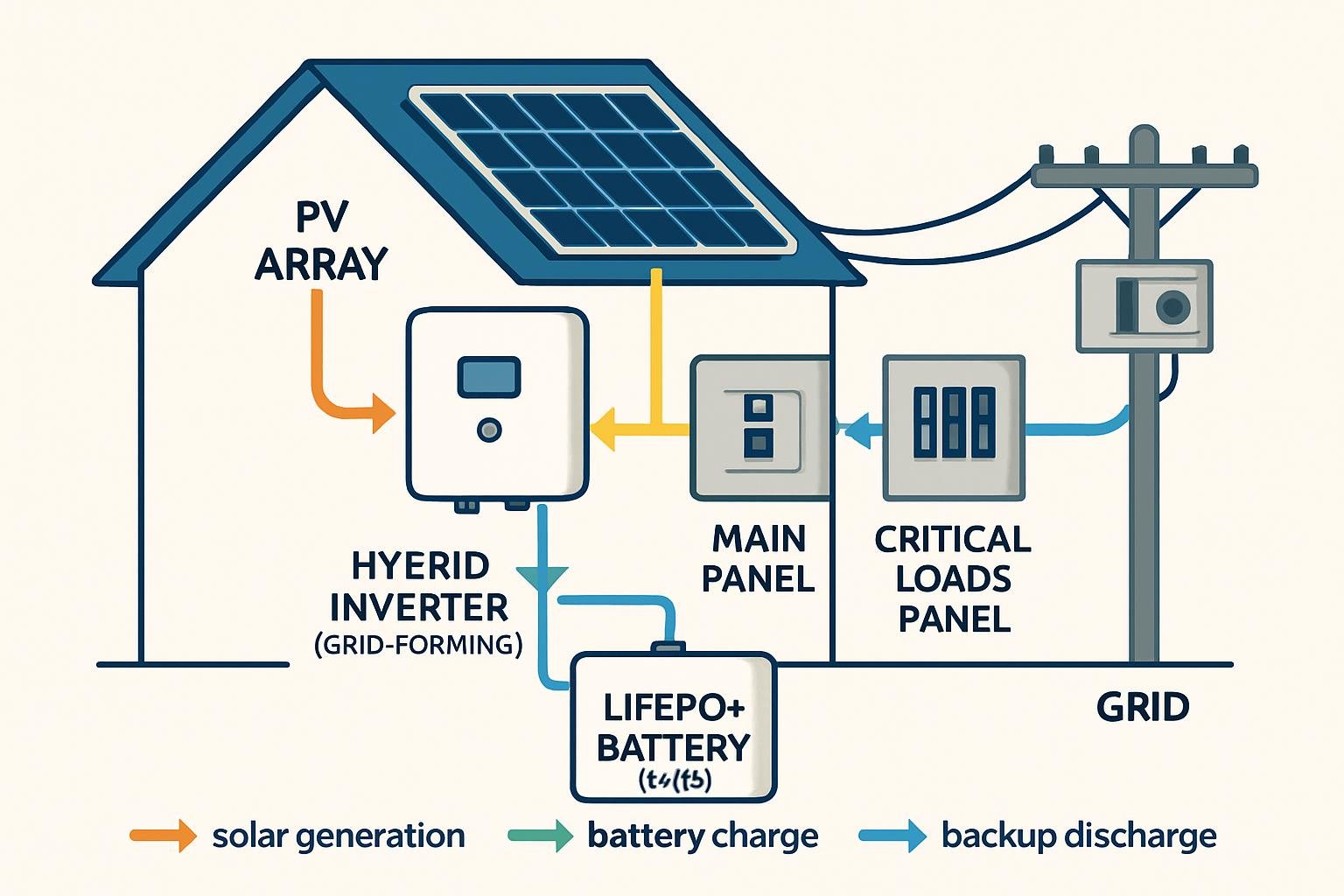
When a grid outage occurs, a backup-capable system must isolate the protected circuits from the utility grid and establish an appropriate independent power supply.
Depending on the system architecture, electricity may come from the battery, solar PV or another supported source.
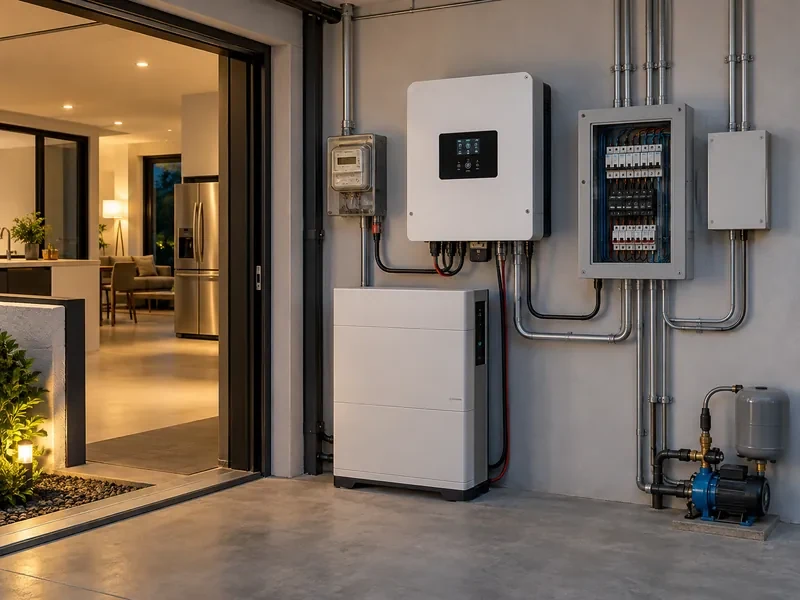
Not every hybrid inverter provides the same backup functionality. Some products have a dedicated EPS terminal, while others require external switching equipment or a backup control unit.
Before selecting equipment, confirm whether the proposed inverter supports the required backup architecture.
2. Continuous Backup Power vs Surge Capacity
One of the most common purchasing mistakes is assuming that an inverter’s rated AC output power automatically represents its continuous backup capability.
For example, two hybrid inverters may both be marketed as 10kW models but have different EPS output specifications.
One may support 10kW continuously during backup operation, while another may have a lower backup rating or additional restrictions.
The exact specifications must be checked in the manufacturer’s datasheet and installation manual.
Continuous Backup Output
Continuous backup power describes the power that the inverter can deliver under the manufacturer’s specified operating conditions without exceeding its continuous rating.
When reviewing this value, check:
- Rated EPS or backup output power
- Maximum backup output current
- Permitted operating temperature
- Any applicable output derating
- Single-phase or three-phase output configuration
- Battery power requirements
Surge and Overload Capability
Some electrical loads require substantially more power during startup than during normal operation.
Common examples include:
- Water pumps
- Refrigerator compressors
- Air conditioners
- Motor-driven workshop equipment
- Certain power tools
Consider a hypothetical water pump with a running input power of 1.5kW.
Depending on the motor and starting method, its startup demand may be several times higher than its normal running demand.
A 5kW inverter may have enough continuous power for the pump but still trip during startup if the instantaneous demand exceeds its permitted overload capability.
Buyers should ask suppliers for the actual EPS overload curve, including both the permitted power and duration.
| Specification | Why It Matters |
|---|---|
| Continuous EPS power | Determines the sustained load capability. |
| Maximum EPS current | Limits the electrical current supplied to backup circuits. |
| Peak or surge power | Indicates short-duration overload capability. |
| Surge duration | Shows how long the inverter can support an overload. |
| Overload recovery | Determines whether the inverter trips, retries or requires intervention. |
| Motor-starting guidance | Helps evaluate compatibility with pumps and compressors. |
Procurement recommendation: Request the manufacturer’s EPS overload specifications rather than assuming that all inverters of the same nominal power can start the same motor loads.
3. Hybrid Inverter Transfer Time: EPS vs UPS
Transfer time describes the interruption or transition period associated with switching from normal grid-connected operation to backup operation, according to the manufacturer’s specified test conditions.
When the grid fails, the inverter must detect the abnormal condition, isolate the appropriate circuits and establish backup power.
Manufacturers may specify transfer times in milliseconds, but the actual behaviour depends on the inverter design, operating mode and installation configuration.
Why Transfer Time Matters
Different electrical loads tolerate power interruptions differently.
| Load Type | Backup Consideration |
|---|---|
| Household lighting | A brief interruption may cause visible flickering. |
| Refrigerators | Compressor restart behaviour and surge demand matter. |
| Wi-Fi routers | A short interruption may cause a reboot. |
| Desktop computers | May require a dedicated UPS to avoid shutdown. |
| Servers and sensitive electronics | Require equipment-specific continuity and power-quality assessment. |
| Critical medical or industrial equipment | Must use a professionally designed power-continuity solution appropriate to the application. |
A hybrid inverter advertised with a short transfer time should not automatically be treated as equivalent to a dedicated uninterruptible power supply.
For example, a supplier may advertise a transfer time of 10ms or 20ms. Buyers should verify whether that value applies to the intended operating mode, load conditions and equipment configuration.
Questions to Ask the Supplier
- What is the specified transfer time for the exact inverter model?
- Under which operating mode was the transfer time measured?
- Does transfer behaviour change with battery state of charge?
- Is the backup output continuously energized during normal operation?
- Does generator integration affect transfer behaviour?
- What happens after an overload or battery shutdown?
For sensitive equipment, the responsible system designer should determine whether a separate UPS is necessary.
4. How Battery Discharge Current Limits Backup Power
The battery is frequently the limiting factor in residential backup systems.
A hybrid inverter cannot deliver more battery-derived power than the battery, its BMS, cabling and inverter battery interface can safely support.
For a simplified DC power calculation:
Battery DC Power (W) = Battery Voltage (V) × Discharge Current (A)
Example: 51.2V Battery With a 100A Discharge Limit
Assume a nominal battery voltage of 51.2V and a continuous discharge-current limit of 100A.
The approximate DC power is:
51.2V × 100A = 5,120W
Available DC power ≈ 5.12kW
If the DC-to-AC conversion efficiency is assumed to be 92%:
5.12kW × 0.92 ≈ 4.71kW AC
This simplified calculation shows why a nominal 10kW inverter connected to a battery limited to 100A at 51.2V cannot be assumed to provide 10kW continuously from battery power alone.
Actual performance depends on operating battery voltage, BMS limits, inverter efficiency, temperature, state of charge and other system restrictions.
Example: 51.2V Battery With a 200A Discharge Limit
At the same nominal voltage:
51.2V × 200A = 10.24kW DC
Assuming 92% conversion efficiency:
10.24kW × 0.92 ≈ 9.42kW AC
Even this arrangement does not automatically guarantee 10kW continuous AC output.
The complete battery and inverter specifications must be checked.
For additional technical background, read our guide to battery discharge current and inverter power.
Battery compatibility also depends on supported voltage ranges, communication protocols and operating modes. Our battery and inverter compatibility guide explains related considerations.
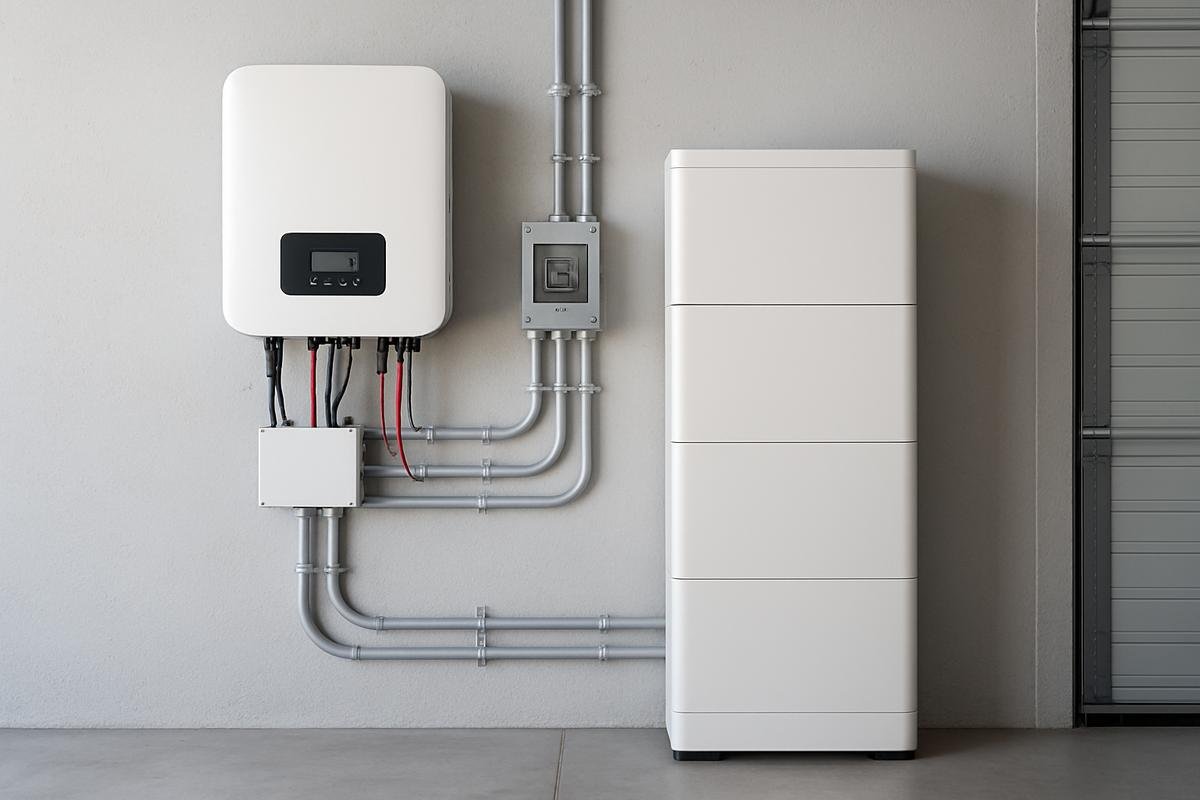
5. Essential-Load Backup vs Whole-Home Backup
Backup system design should begin with the loads that must remain operational during a power outage.
Two common approaches are essential-load backup and whole-home backup.
Essential-Load Backup
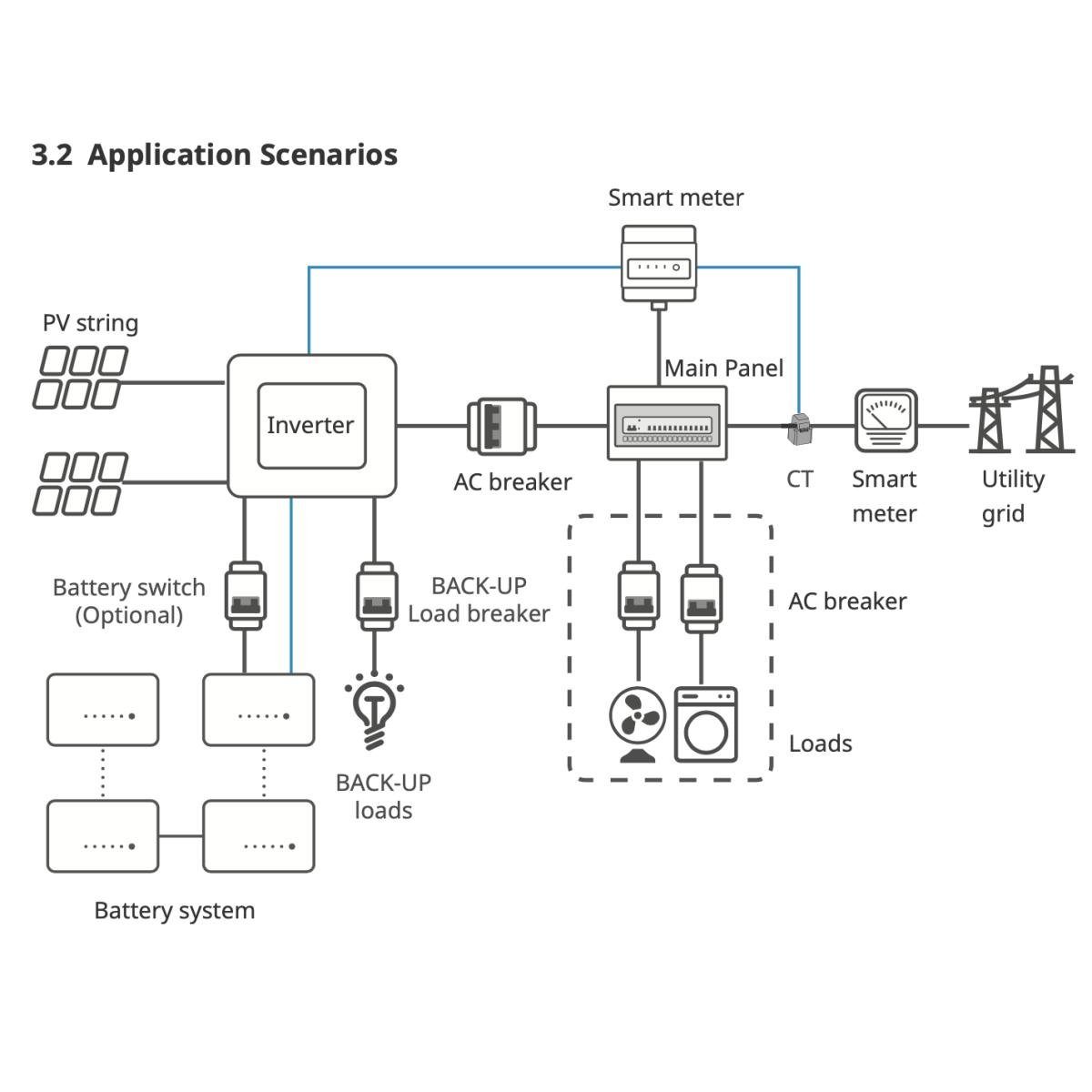
An essential-load system supplies selected electrical circuits through a dedicated backup distribution arrangement.
These circuits may include:
- Basic lighting
- Refrigeration
- Internet equipment
- Security systems
- Selected electrical outlets
- Small water pumps
- Other customer-defined critical loads
By excluding large nonessential loads, an essential-load system can reduce peak power demand and extend backup runtime.
This architecture is often practical for residential installations where the customer wants reliable emergency electricity rather than uninterrupted operation of every appliance.
Whole-Home Backup
Whole-home backup aims to support most or all household circuits through a suitably designed inverter and transfer system.
However, whole-home backup does not mean every appliance can operate simultaneously without restriction.
Large loads such as electric water heaters, EV chargers, air conditioners and pumps may exceed the inverter’s backup capacity or rapidly deplete the battery.
A complete whole-home backup design may require:
- A sufficiently rated inverter
- Adequate battery discharge capability
- Correct transfer and isolation equipment
- Load-management controls
- Appropriate circuit protection
- Neutral and earthing arrangements suitable for the installation
- Compliance with applicable local electrical requirements
In many residential projects, automatically disconnecting selected high-power loads during outages can improve system reliability.
Why EV Chargers Are Often Excluded From Backup Circuits
A 7kW EV charger can consume a substantial portion of a typical residential inverter’s available backup output.
If the EV charger continues operating during an outage, it may overload the system or rapidly discharge the stationary battery.
For this reason, EV charging circuits are often excluded from the essential-load distribution board or managed through an appropriate energy-management system.
The correct approach depends on the customer’s priorities, equipment capability and electrical design.
6. How to Calculate Battery Backup Runtime
Inverter power and battery energy capacity describe different characteristics.
The inverter’s kW rating indicates the power it can supply within its operating limits.
The battery’s kWh rating indicates its nominal stored energy.
To estimate backup runtime, installers must consider the expected energy consumption of the protected loads and the usable energy available from the battery.
Example: Residential Essential-Load Backup
Consider a hypothetical household that wants to maintain essential electrical services during an eight-hour outage.
| Electrical Load | Assumed Average Power | Operating Time | Energy Required |
|---|---|---|---|
| Refrigerator | 100W | 8 hours | 0.80kWh |
| Lighting | 200W | 5 hours | 1.00kWh |
| Wi-Fi and security equipment | 50W | 8 hours | 0.40kWh |
| Water pump | 800W | 1 hour | 0.80kWh |
| Ventilation fans | 100W | 6 hours | 0.60kWh |
| Total | — | — | 3.60kWh |
These figures are illustrative assumptions rather than measured household consumption.
Assume:
- Required AC energy: 3.60kWh
- Usable battery energy fraction: 90%
- Assumed DC-to-AC energy conversion efficiency: 90%
The approximate nominal battery capacity required is:
Required Battery Capacity = AC Energy Demand ÷ (Usable Fraction × Conversion Efficiency)
3.60kWh ÷ (0.90 × 0.90) ≈ 4.44kWh
Under these simplified assumptions, a nominal 5.12kWh battery could provide sufficient energy for the stated load schedule.
However, this does not prove that the system can operate all connected equipment successfully.
The designer must separately verify:
- Simultaneous peak load
- Motor startup demand
- Battery continuous discharge-current limits
- Battery peak discharge capability
- Inverter EPS continuous and surge ratings
- Reserve state of charge
- Battery ageing and temperature effects
- Actual appliance duty cycles
Additional design margin may be necessary depending on the customer’s required reliability and operating conditions.
7. Solar PV, Black Start and Generator Operation During Outages
Some hybrid inverter systems can continue using solar PV while operating independently of the utility grid.
This can extend backup runtime during daylight hours, but the exact operating behaviour depends on the inverter architecture, battery conditions and system configuration.
Can Solar Panels Supply Loads During a Grid Outage?
In a compatible system, PV energy may support backup loads and charge the battery while the grid is unavailable.
However, buyers should verify whether the inverter requires a functioning battery to maintain the backup power supply.
Important questions include:
- Can PV continue operating in EPS mode?
- Can PV directly support backup loads while the battery is charging?
- What happens when battery state of charge is low?
- Can the system restart using PV after a battery shutdown?
- How does the inverter control excess PV production during an outage?
Black-Start Capability
Black start refers to the ability of a power system to establish operation without an available external grid supply, subject to its design and energy-source requirements.
For hybrid inverters, black-start capability may depend on battery voltage, battery state of charge, BMS status and the manufacturer’s startup logic.
A system that supports battery-based black start should not automatically be assumed to support PV-only startup.
Generator Integration
In markets where grid interruptions are frequent, customers may also require generator compatibility.
Some hybrid inverters support generator input, generator charging or automatic generator control.
Before quotation, confirm:
- Whether a dedicated generator input is available
- Whether the generator shares another AC input
- Supported generator voltage and frequency
- Maximum permitted generator charging current
- Automatic generator start/stop functionality
- Generator and battery operating logic
- Required external switching and protection equipment
Generator functionality must be confirmed for the exact inverter model and firmware configuration.
8. Single-Phase vs Three-Phase Backup Requirements
Backup behaviour can differ significantly between single-phase and three-phase hybrid inverters.
A three-phase inverter’s total rated power does not necessarily mean that the full output can be supplied through any individual phase.
For example, a three-phase backup system may have specific limits on:
- Continuous output per phase
- Permitted phase imbalance
- Single-phase motor loads
- Neutral current
- Backup output configuration
- External transfer equipment
Buyers should request the manufacturer’s phase-specific backup specifications and supported unbalanced-load conditions.
Transfer and Electrical Isolation
Grid-connected backup systems must prevent unsafe energization of the utility network during an outage.
Depending on the equipment and installation requirements, the system may use internal switching, external transfer equipment or a dedicated backup interface.
Neutral and earthing arrangements require particular attention because they can affect protective-device operation and electrical safety.
Installation must follow the exact manufacturer’s instructions and applicable local electrical rules.
IEC 62109-1 provides general safety requirements for photovoltaic power-conversion equipment. Product-specific backup functions, grid connection requirements and local installation compliance must be evaluated separately.
9. Hybrid Inverter EPS Specification Comparison Checklist
For distributors and project procurement teams, backup capability should be reviewed as a complete system specification rather than a single marketing feature.
| Specification | Questions for the Supplier |
|---|---|
| Continuous EPS power | What is the sustained backup output rating? |
| Maximum EPS current | What is the permitted output current? |
| Surge capability | What overload is permitted and for how long? |
| Transfer time | What is the specified transfer time and test condition? |
| Battery voltage | What battery voltage range is supported? |
| Battery discharge current | What current is required for full backup output? |
| PV during outage | Can solar PV operate in EPS mode? |
| Black start | Can the inverter start without an active grid? |
| Three-phase backup | What phase imbalance and per-phase limits apply? |
| Generator support | What generator functions and interfaces are available? |
| Required accessories | Are a backup box, meter, CT or transfer switch required? |
| Compliance documentation | Which documents apply to the exact model and destination market? |
These questions should be answered using model-specific datasheets, installation manuals and supplier confirmations.
For additional procurement considerations, see our hybrid inverter wholesale guide.
Need Help Matching a Hybrid Inverter to Your Backup Loads?
Are you sourcing a hybrid inverter for residential backup, solar installers, distributors or small commercial energy-storage projects?
Send ORIDY ENERGY your critical-load list, required backup duration, battery specifications, destination country and estimated order quantity.
We can help coordinate technical specification comparisons with relevant Chinese suppliers and identify configuration questions that should be resolved before quotation.
Website: ORIDY ENERGY
Request a Quote: Contact Our Team
WhatsApp: Discuss Your Backup Project
10. How ORIDY ENERGY Supports Hybrid Inverter Sourcing
Overseas buyers often need more than a hybrid inverter product catalogue.
They need to understand whether the proposed inverter, battery and backup accessories can work together under the operating conditions of the destination market.
ORIDY ENERGY supports renewable-energy sourcing and supply-chain coordination from China.
For hybrid inverter projects, our role is to help overseas installers, distributors and project buyers communicate technical requirements, compare available supply options and coordinate questions with relevant manufacturers and suppliers.
Depending on the project, this may include:
- Comparing hybrid inverter power ratings and backup specifications
- Coordinating battery compatibility questions
- Reviewing available EPS configurations and accessories
- Clarifying generator and solar backup operating requirements
- Requesting technical documentation for shortlisted models
- Coordinating commercial quotations and order requirements
- Supporting procurement and supplier communication
Buyers can review our hybrid solar inverter product category to explore available product directions.
Final equipment suitability and electrical design must be confirmed using the exact model documentation and applicable local requirements.
11. Frequently Asked Questions About Hybrid Inverter Backup Output
Is EPS output the same as normal inverter output?
Not necessarily. Some hybrid inverters provide similar continuous power in grid-connected and backup modes, while others have different output limits. Buyers should check the exact EPS specifications.
Can a 10kW hybrid inverter run a 10kW load during an outage?
Only when the inverter’s continuous backup rating, battery discharge capability, wiring and operating conditions support that demand. Surge loads may require additional power capacity.
What transfer time is suitable for home backup?
The required transfer time depends on the connected equipment. Household appliances and sensitive electronics may have different interruption tolerances. A dedicated UPS may still be necessary for loads requiring greater power continuity.
Can solar panels continue generating electricity during a blackout?
Some hybrid inverter systems support PV operation during grid outages. However, functionality depends on inverter architecture, battery conditions and operating settings. Confirm the exact model’s islanded PV operation.
Can a hybrid inverter provide whole-home backup?
Some systems can support whole-home backup when appropriately sized and installed. Large loads, surge demand, battery power and transfer arrangements must be considered. Load management may be necessary.
How do I calculate the battery size required for backup?
Estimate the total energy consumption of the protected loads in kWh, then account for usable battery capacity, conversion losses and appropriate design margin. Separately check continuous power and startup surge requirements.
Can an EV charger operate during backup mode?
It may be possible in a suitably designed system, but EV charging can create substantial continuous demand. Many residential installations exclude EV charging from essential backup circuits or apply load-management controls.
What information should I provide when requesting a hybrid inverter quotation?
Provide the destination market, required inverter power, grid phase, critical-load schedule, largest motor loads, battery specifications, desired backup runtime, solar PV capacity, generator requirements and estimated purchase quantity.
Conclusion: Backup Performance Depends on the Complete System
Hybrid inverter backup performance should not be evaluated using nominal AC power alone.
A reliable system requires an appropriate combination of continuous EPS output, surge capability, battery discharge power, transfer behaviour, backup wiring and available stored energy.
For distributors and installers, checking these specifications before purchasing can reduce configuration errors, unexpected commissioning problems and unsuitable product recommendations.
The most effective starting point is a clear load schedule supported by model-specific technical documentation.
Source Hybrid Inverters for Residential and Commercial Backup Projects
ORIDY ENERGY works as a China-side renewable-energy sourcing and supply-chain coordination partner for overseas installers, distributors and project buyers.
If you are evaluating hybrid inverters for backup applications, share your load requirements, battery specifications, destination market and expected quantity.
We can help coordinate comparisons of suitable inverter and battery configurations with relevant Chinese suppliers before sample evaluation or bulk quotation.
Website: https://oridy.net/
Contact: https://oridy.net/contact-us/
WhatsApp: https://wa.me/8618217811889