Load Shedding Battery South Africa Wholesale: Complete Distributor Guide 2026
Load shedding battery South Africa wholesale is the most reliably demanded energy product on the African continent—because Eskom’s blackouts never stop. South Africa has not had a single day without rotational power cuts since October 2023. Stage 6 load shedding removes 6,000 MW from the grid, leaving homes and businesses without electricity for up to 12 hours a day. The economic cost exceeds R300 billion per year, according to the South African Reserve Bank. But for battery distributors, this crisis has created a market where customers buy not because of environmental concern or government subsidy, but because the alternative to a battery is losing revenue, watching food spoil, and sitting in the dark.
The country installed more than 5,000 MW of rooftop solar between 2023 and 2025, according to SAPVIA data. The battery attachment rate — the share of new solar installations that include storage — surged from under 10% in 2021 to over 60% in 2025. South Africans learned through painful experience that solar panels without batteries provide zero power during evening load shedding. Only storage keeps the lights on when the sun is down and Eskom cuts the grid. That lesson, burned into the national consciousness during the brutal 2023 winter blackouts, has permanently reshaped the market.
The South African battery market is projected to grow from roughly R15 billion in 2025 to more than R40 billion by 2030. For distributors who can supply NRCS-compliant LiFePO4 batteries with confirmed compatibility across the dominant inverter brands — Deye, SunSynk, Luxpower, and Growatt — demand exceeds supply. The binding constraint is not finding customers. It is finding reliable, certified, competitively priced product. This guide walks through the load-shedding economics, the products that sell, the compatibility requirements, and the import logistics — so you can enter this market with confidence.
Featured Snippet: What is a load shedding battery South Africa wholesale?
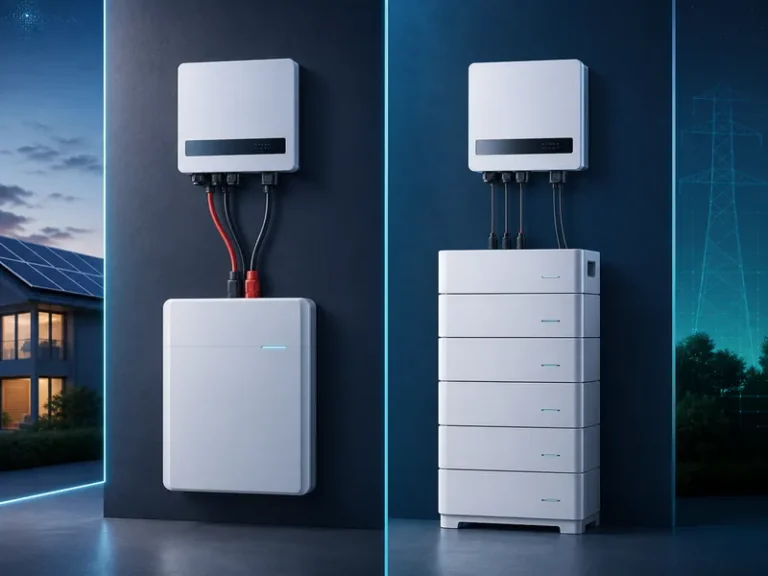
A load shedding battery is a LiFePO4 energy storage unit that pairs with a hybrid inverter to keep South African homes and businesses powered during Eskom’s rotational blackouts. The volume leader is a 5 kWh, 48V wall-mounted unit that pairs with Deye or SunSynk inverters. Wholesale pricing is competitive FOB China, landed in Johannesburg at roughly R16,000–R22,000. South Africa applies 0% import duty on solar storage batteries and 15% VAT (recoverable). NRCS approval plus IEC 62619 certification is mandatory. DDP Durban delivery takes 55–75 days from order, with a DDP premium of 12–18% over FOB.
1. How Bad Is Load Shedding and Why Will It Continue?
Quick Answer: Load shedding will persist for at least three to five more years. Eskom’s coal fleet averages 41 years old and loses 12,000–16,000 MW to unplanned breakdowns daily. The utility’s nominal 46,000 MW capacity typically delivers only 27,000–30,000 MW. The newest plants — Medupi and Kusile — were commissioned a decade late and have never run at design capacity. While the government’s plan to add 10,000 MW of renewable and gas generation is progressing, the supply-demand gap will take years to close. For a battery distributor, that persistence is the market: a multi-year, structurally guaranteed demand base.
Why hasn’t the government fixed the grid by now?
Because the problem is physical, not political. South Africa’s generation fleet is built on a foundation of aging coal plants that were designed in the 1970s and 1980s and have been starved of maintenance for two decades. Replacing 20,000 MW of unreliable capacity with new generation is a decade-long capital programme, not a policy tweak. Even the most optimistic forecasts from the National Energy Crisis Committee do not project an end to load shedding before 2027–2028. The interim reality is what matters for your business: for the next three to five years, millions of South African households and businesses will need backup power, and the cheapest reliable form of backup is solar-plus-storage.
What does the diesel alternative cost, and why does it lose?
Diesel is the incumbent competitor and its economics have collapsed. Diesel prices have risen 40% since 2021. A 5 kVA generator burning R25-per-litre diesel costs R300–R500 per day during extended outages — R9,000–R15,000 per month. That is before servicing, breakdowns, and generator replacement. A 5 kWh LiFePO4 battery paired with a 5 kW hybrid inverter costs R35,000–R55,000 installed, once, with near-zero operating cost for 10–15 years. The payback period versus diesel is 12–18 months for a business running a generator daily. After payback, the battery produces free backup power for the rest of its life. This arithmetic — not ideology — is what closes the sale, and it is why every South African business with a generator is a live prospect for a battery.
2. Which Battery Products Sell Fastest in South Africa?
Quick Answer: The 5 kWh 48V wall-mounted LiFePO4 battery is the volume leader — it pairs directly with the 5 kW Deye or SunSynk hybrid inverter installed in tens of thousands of South African homes. The 10 kWh segment is growing fastest as households upsize for Stage 6’s 10–12 hour outages. Commercial storage (15–50 kWh rack-mounted) is the highest-value segment, with deal sizes of R80,000–R250,000 and customers who treat backup power as business-critical infrastructure. Landed wholesale pricing: 5 kWh at R16,000–R22,000, 10 kWh at R32,000–R44,000.
South Africa Battery Product Matrix
| Segment | Capacity | Typical Customer | Landed Price | Margin |
|---|---|---|---|---|
| Residential entry | 5 kWh 48V wall | Home, 4-hr stage 4 backup | R16,000–R22,000 | 25–35% |
| Residential upsized | 10 kWh (2×5 or 1×10) | Home, Stage 6 full evening | R32,000–R44,000 | 28–38% |
| Small business | 10–20 kWh | Shop, clinic, office | R60,000–R120,000 | 30–40% |
| Commercial | 15–50 kWh rack | Restaurant, factory, medical | R80,000–R250,000 | 30–45% |
Landed pricing Johannesburg/Durban, Q3 2026. Margins reflect direct-import distributor economics.
Why is the 10 kWh segment the fastest-growing?
Stage 6 load shedding changed the sizing calculus. A single 5 kWh unit comfortably covers a Stage 4 slot — roughly four hours — but Stage 6 spreads 10–12 hours of outage across a single day, which a 5 kWh unit cannot cover without aggressive load management. Households that bought a 5 kWh unit in 2023 are now buying a second unit, or upgrading to a 10 kWh system, to run electric cooking and get through a full evening and overnight outage. This upgrade cycle is a repeat-purchase engine for distributors: the same customer who bought entry-level in 2023 returns for capacity in 2026. Distributors who capture the initial 5 kWh sale and maintain the relationship are positioned to capture the 10 kWh upgrade.
What makes the commercial segment the most valuable?
Commercial customers are the highest-margin segment because they cannot tolerate downtime. A restaurant losing R15,000 per day during load shedding recovers the cost of a 30 kWh system in 12–18 months. A medical practice with vaccine refrigerators cannot accept a single hour of interruption. A manufacturer whose line stops every time Eskom announces Stage 4 faces material financial losses. These buyers do not shop on price alone — they need system design, reliability, and a supplier who can commission the system. That service requirement justifies stronger margins (30–45%) and creates recurring revenue through monitoring, maintenance, and future expansion. For a distributor, one commercial account is worth several residential customers in margin terms, and the relationships are stickier.
🔋 Sourcing Load Shedding Batteries for South Africa? We Can Help.
Verified LiFePO4 factories. NRCS/IEC 62619 documentation. Deye/SunSynk/Luxpower compatibility confirmed. DDP Durban or Johannesburg. OEM branding with your logo, custom interfaces, specs, packaging, and multilingual manuals. MOQ from 20 units. Get a Quote →
3. Which Inverter Brands Dominate and Why Compatibility Matters?
Quick Answer: Deye and SunSynk together power over 70% of South African solar-plus-storage installations — both are manufactured by Ningbo Deye Inverter Technology. Their success is built on handling the grid’s wide voltage fluctuations without tripping, true hybrid architecture with sub-10-millisecond transfer, and heavy investment in local installer training. If your battery does not communicate with Deye and SunSynk inverters via CAN bus or RS485, you are locked out of 70% of the addressable market. Luxpower is the fast-growing challenger at 15–25% cheaper. Confirmed compatibility with Deye, SunSynk, and Luxpower covers roughly 85% of installations.
What does “confirmed compatibility” actually require?
A battery that claims compatibility is not the same as one that has proven it. Installers need three things before they will recommend a new battery brand: communication protocol documentation showing the exact CAN bus or RS485 register map, a demonstrated working pairing — ideally a reference installation the installer can visit or call — and firmware that survives real-world grid conditions rather than just a lab bench test. South Africa’s grid is electrically noisy: voltage sags, frequency excursions, and phase imbalances are common during load-shedding transitions. A battery whose BMS trips or desynchronizes when the inverter switches to island mode will generate service calls and warranty claims. The distributors who succeed in this market do their compatibility testing before they ship a single container.
Who else matters beyond the big two?
Luxpower has grown quickly by undercutting Deye/SunSynk on price while maintaining acceptable reliability, capturing share among cost-conscious residential buyers. Growatt, Victron, and SMA serve smaller but established niches — Victron especially in the off-grid and marine segments where its reputation for robustness commands a premium. For a new battery entering the market, the pragmatic strategy is: certify compatibility with Deye, SunSynk, and Luxpower first, which opens roughly 85% of the market, then add Growatt and Victron as volume justifies. Attempting to be “compatible with everything” on day one spreads testing resources thin and usually means weak compatibility with the brands that actually dominate.
4. How Do You Import Batteries into South Africa?
Quick Answer: Durban handles 60% of South Africa’s container traffic and is the primary entry port for Asian imports. Sea freight Shanghai to Durban takes 22–28 days; port clearance runs 7–10 working days with correct documentation. Import duty on lithium batteries for solar storage is 0% under South Africa’s renewable-energy equipment incentive (extended through 2027). VAT of 15% applies on landed cost and is recoverable for VAT-registered businesses. NRCS Letter of Authority is required — IEC 62619 certification from TUV, SGS, or CSA serves as the technical basis, and the application takes 4–8 weeks, so start it before your container leaves China. DDP shipping to Johannesburg, Durban, or Cape Town is the recommended term, with a 12–18% premium over FOB. Budget 55–75 days order-to-delivery.
What is NRCS approval and why does it matter?
The National Regulator for Compulsory Specifications (NRCS) requires a Letter of Authority for every battery model imported for residential or commercial use. The process is document-driven: you submit the IEC 62619 safety test report, the factory’s ISO 9001 certificate, product technical datasheets, and a local representative declaration. Approval takes four to eight weeks and the Letter of Authority is model-specific. Importing without NRCS approval risks the container being held at Durban until documentation is resolved — demurrage runs R1,000–R3,000 per container per day, and a two-week hold can wipe out a shipment’s margin. The practical lesson: begin NRCS applications the moment you select a product, not after you place the order.
What is the realistic door-to-door timeline?
Plan for 55–75 days from confirmed order to delivery at your warehouse:
- Factory production: 15–30 days (OEM-branded orders add 10–15 days)
- NRCS application: 4–8 weeks, run in parallel with production
- Inland trucking + export customs (China): 3–5 days
- Sea freight Shanghai → Durban: 22–28 days
- Durban port clearance: 7–10 working days (clean docs)
- Road freight to Johannesburg: 8–12 hours
Lithium battery shipments require a dangerous-goods declaration under the IMDG Code, backed by UN38.3 test reports and an MSDS. Some forwarders charge a DG surcharge per container for Class 9 cargo — confirm whether it is included in your quotation or billed separately.
5. How Do South Africans Finance Battery Purchases?
Quick Answer: South Africa’s big four banks — FNB, Standard Bank, Nedbank, and Absa — actively lend for solar and battery installations. Homeowners can add R50,000 for a battery to an existing home loan at roughly R600 per month, while monthly electricity and diesel savings typically exceed R1,200 — cash-flow positive immediately. For businesses, Section 12B of the Income Tax Act allows 125% accelerated depreciation on renewable-energy assets in year one: a R200,000 battery system generates a R250,000 tax deduction. The Energy Bounce Back Scheme provides government-guaranteed loans for SMEs. Distributors who explain these financing pathways close deals faster than those selling on specifications alone.
Why does financing matter more than price in this market?
South African buyers are price-sensitive but cash-constrained. The value proposition is not “this battery is cheaper than diesel over 10 years” — it is “this battery costs less per month than the diesel you are already buying, from the first month.” That reframe only works when the buyer can access financing that spreads the upfront cost. A distributor who can point a homeowner to an Absa home-loan top-up, or a business to a Section 12B tax deduction and an Energy Bounce Back loan, removes the single biggest objection: the upfront capital outlay. This is a genuine competitive moat, because it requires local financial knowledge that a pure equipment supplier does not have.
What does Section 12B mean for your commercial customers in practice?
Section 12B of the Income Tax Act permits a business to deduct 125% of the cost of qualifying renewable-energy assets (including battery storage) in the first year of use. For a company on the 27% corporate tax rate, a R200,000 battery system yields a R250,000 deduction worth R67,500 in tax saved in year one — effectively a 34% discount on the installed cost. This changes the payback calculation dramatically for commercial buyers and is a powerful closing tool for the commercial segment, where a single deal can be worth R100,000+. Distribute this information to your commercial prospects; it is under-used and it moves deals.
🚀 Ready to Start Your Load Shedding Battery Import?
Tell us your target specification and volume. We quote within 24 hours — NRCS documentation, inverter compatibility confirmed, DDP to your warehouse. Contact Oridy Energy →
Frequently Asked Questions
1. What minimum order quantity applies to load shedding batteries?
MOQs start at 20–50 units for stock batteries and 50–100 for OEM-branded units. Trial orders of 10–20 units are available at a modest per-unit premium. A 20-unit mixed trial of 5 kWh and 10 kWh models is a practical starting point for testing market response before committing to container volumes — request a quote for landed pricing.
2. Which battery brands do South African installers trust?
Pylontech is the volume leader, prized for reliability, Deye/SunSynk compatibility, and competitive pricing. Freedom Won is a South African manufacturer with premium pricing and excellent local support. Hubble and Revov offer mid-market alternatives. A new brand needs: verified inverter compatibility, NRCS approval, pricing within 10% of Pylontech equivalents, a South African warranty process with a local phone number, and ideally a reference installation installers can visit.
3. What warranty and after-sales support do installers expect?
A South African phone number answered during business hours by someone who can diagnose faults. A defined RMA process with replacement units stocked in South Africa. Installer labour reimbursement for removing and replacing failed units. Standard warranty is 5 years for battery and BMS, extendable to 10. Installers remember which distributors honour warranties smoothly and which make every claim difficult — in South Africa’s tight-knit installer community, warranty reputation determines whether your product gets recommended.
4. Is air freight an option for importing lithium batteries?
No. Air freight is prohibited for lithium batteries exceeding 100 Wh under IATA dangerous-goods regulations, and a 5 kWh battery contains 5,000 Wh. All battery imports into South Africa move by sea freight, typically LCL (less than container load) for trial orders or FCL (full container load) at 50+ units. A 20-foot container holds roughly 50–80 wall-mounted batteries depending on packaging. Plan sea freight into your timeline from day one — there is no air shortcut for storage batteries.
5. How do I verify a supplier before importing load shedding batteries?
Request a live video call showing the production line — not just a showroom. Ask for the ISO 9001 certificate and verify it on the issuing body’s website. Request three recent South African client references and contact them. Confirm the IEC 62619 and UN38.3 test reports are issued by an accredited laboratory (TUV, SGS, CSA) and list the manufacturer’s name, not a trading company’s name. Our free sourcing guide includes a full supplier-verification checklist.
6. Can I get batteries delivered DDP to my warehouse in Johannesburg or Durban?
Yes. DDP delivery to Johannesburg, Durban, Cape Town, or any major city is standard from experienced Chinese exporters. Under DDP terms your price includes factory-to-port, ocean freight, insurance, import duty (0%), VAT, NRCS documentation, port charges, clearing-agent fees, and final trucking. DDP is strongly recommended for first-time importers and smaller shipments. At higher volumes, experienced importers may switch to CIF and manage South African-side clearance themselves to capture the logistics margin.
Ready to Supply South Africa’s Battery Market?
Tell us your target specification and volume. We quote within 24 hours — NRCS documentation, inverter compatibility confirmed, DDP to your warehouse.Get Your Battery Quote →
📧 info@oridy.net | 📱 +86 182 1781 1889
Disclaimer: Import duties, NRCS requirements, and Eskom load shedding schedules are subject to change. Verify current regulations with your customs broker and the NRCS. Battery pricing is indicative as of Q3 2026.